A Voice of Customer program across 21 products
My manager and I co-owned a Voice of Customer program covering 21 products. I designed the dashboards that let product teams drill from global NPS down to their own product's issues.
The problem
LogMeIn supported 21 products across global markets. Customer feedback was scattered across support calls, satisfaction surveys, and post-interaction forms, and no team had a single place to see trends or tie sentiment to product changes.
My role and the team
My manager and I co-owned the program. He built the data pipelines and ran it day to day. I owned the dashboards and the insight gathering behind them, and the categorization ontology the call transcripts were sorted against, which is its own case study.
I also ran the VOC teams for Grasshopper and GoToMeeting. My manager ran three, and we built the framework all of them used.
The approach
Dashboards over reports. Feedback changed every day, so I built living dashboards instead of static reports.
They brought call transcripts, surveys and in-product feedback together, so a PM could start at global NPS, drill down to the issues behind their own product’s score, and listen to the customer calls behind them, without a researcher in the room. Anyone in the company could open them, and I automated PDF reports from the dashboards, emailed on a schedule, for people who wouldn’t log in.
A monthly sync for each product. For Grasshopper and GoToMeeting I brought the five biggest issues to a monthly meeting with the PMs, designers, marketing, customer support operations and sometimes the engineering manager, and we groomed them into action items. Each product team ran it a little differently.
Constraints. The hardest part was persuading teams that fixing what was hurting customers wasn’t a drag on new features, and that the dashboards could back up their decisions.
What we learned
- Categorization worked dramatically better when it was built on customer phrasing instead of internal jargon.
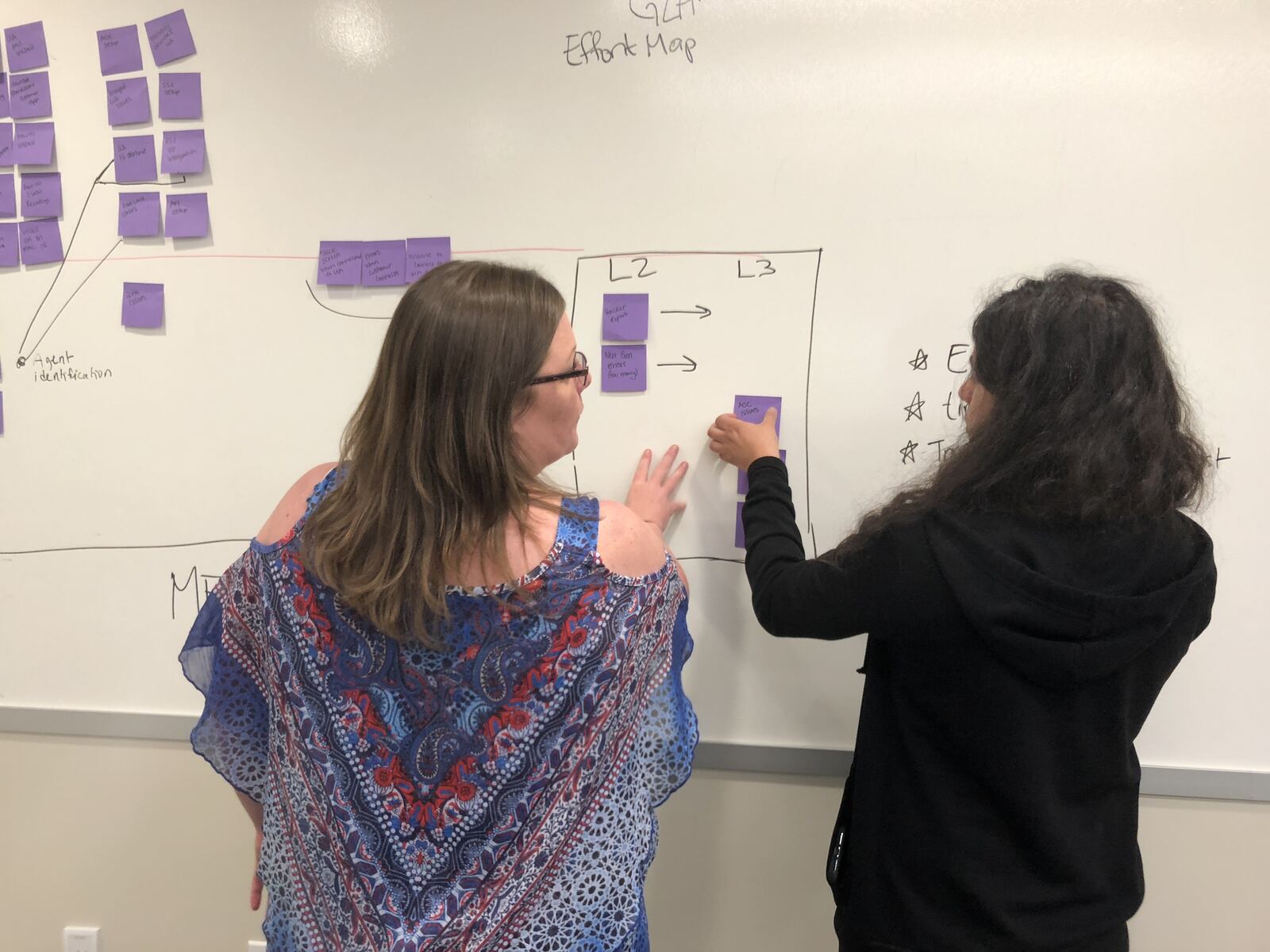
- Mapping issues by how they get resolved (self-serve, agent, escalated) surfaced the root causes that moved NPS most.
- Teams used the insight more when it was visual, drillable, and in their customers’ words.
What changed
These are outcomes of the whole program, not mine alone:
- +15% CSAT.
- 12% reduction in support call volume.
- One dashboard across all 21 products, used by UX, product management, and CX leadership, plus a repeatable framework for turning feedback from many sources into prioritized product work.